How Hospital Furniture Changed Beyond Its Basic Purpose
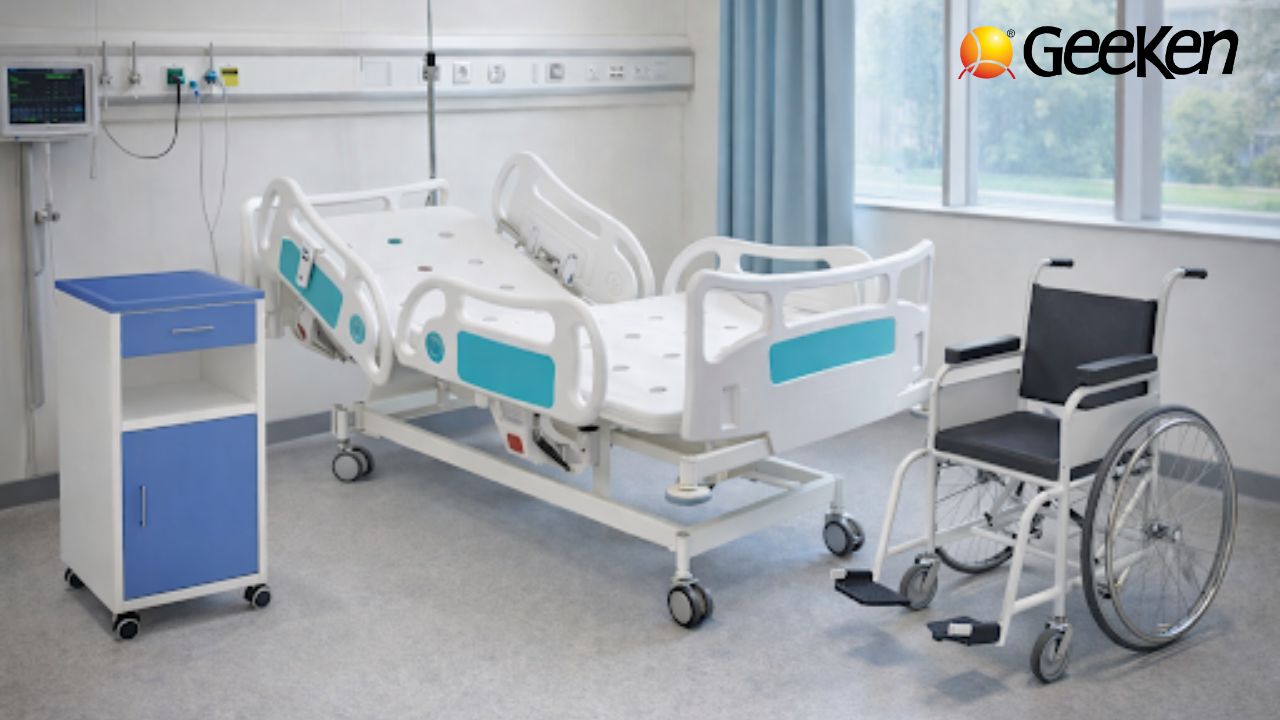
Hospital furniture used to only have one job: to support medical treatments. A bed was just a bed. A stretcher was a stretcher. For decades, this practical way of thinking ruled healthcare infrastructure.
But in the last five years, that way of thinking has changed a lot. Modern hospital furniture combines technology, ergonomics, infection control, and the patient experience into one solution.
As a hospital furniture manufacturer in Delhi for 30 years through Geeken, I've seen this change happen. The effects go beyond comfort; they're changing patient outcomes and how well the hospital runs.
Modular and Flexible Design: Adapting to Changing Healthcare Needs
Healthcare facilities have to deal with unforeseen demands. COVID-19 showed this in a big way: hospitals had to quickly change the layout of their rooms, turning regular wards into ICUs in just a few days.
Modular furniture from professional hospital furniture manufacturers in Delhi NCR makes this possible. Modern medical furniture has:
Layouts that can be changed
Utilities that can be connected quickly
Multiple uses
We recently created a modular patient room for a hospital in Gurgaon. In less than two hours, the same room can change from a general ward with four beds to a semi-private ward with two beds or an ICU with one bed and more equipment. This flexibility is quite useful during times when the flu is at its worst. Traditional fixed furniture couldn't handle such adaptability.
Infection Control: Beyond Surface Treatments
After the pandemic, infection control is the most important thing to think about while constructing healthcare infrastructure. Modern hospital furniture is made with:
Materials that kill germs
Surfaces that clean themselves
Construction that doesn't leave any seams, which stops bacteria from building up
This technology goes beyond copper-infused surfaces. We're using nanotechnology-based coatings that actively kill germs. Hospital bed frames are made without joints, which means there are no cracks where germs can hide.
A 150-bed hospital in Noida that used our infection-control furniture had a 32% drop in healthcare-associated infections over 18 months. This means that patients stay in the hospital for less time, use fewer antibiotics, and the hospital's reputation improves.
Investing in specialized hospital furniture suppliers in Delhi NCR who offer these solutions pays off in measurable ways.
Ergonomics for Healthcare Workers: The Overlooked Dimension
Patient comfort gets a lot of attention. What about ergonomics for healthcare workers? A lot of the time, people don't pay attention to it. But nurses, aides, and technicians are always using hospital furniture. Bad ergonomics makes staff tired, raises the risk of injury, and lowers the quality of care.
Modern hospital furniture from thoughtful hospital furniture manufacturers in Delhi meets both of these needs: it makes patients comfortable and helps staff work more efficiently.
For example:
Wheelchairs from our wheelchair supplier range now have push handles that can be adjusted in height to reduce back strain on nurses
Hospital beds include motorized patient repositioning, which cuts down on the need for human lifting
Stretchers from our stretcher dealers in Delhi collection may be set up at different heights, which makes it easier to move patients
After making all of its furniture more ergonomic, a 200-bed hospital saw a 45% drop in staff back injuries. Claims for worker compensation went down as well. The money spent on furniture became self-funding because the costs of injuries went down.
The Technology Integration Challenge
However, smart furniture has problems with implementation. The IT infrastructure in hospitals typically can't handle connected furniture systems. Patient monitoring furniture raises issues about data privacy. To keep things running well, you need a lot of technical knowledge.
As hospital furniture dealers in Gurgaon, we've realized that a thorough approach is needed for successful implementation:
IT Assessment: Assess your current IT skills before buying furniture
Staff Training: Full training on how to use and care for smart furniture
Vendor Support: Pick hospital furniture suppliers in Delhi NCR who would give you ongoing technical help
Phased Implementation: Test smart furniture in one ward before rolling it out to the whole hospital
This makes it easier to execute.
What Forward-Thinking Hospitals Prioritize
Hospitals future-proofing their infrastructure focus on:
1. Technology Compatibility
Furniture that works with electronic health record systems, building automation, and patient monitoring platforms.
2. Infection Control
Antimicrobial surfaces, seamless construction, and materials that are easy to clean should all be standard features, not extras.
3. Flexibility
Modular designs that let you quickly change the layout of a space to meet the needs of different patients and levels of acuity.
4. Ergonomics
Designs that focus on both patient comfort and the efficiency of healthcare workers.
5. Sustainability
Using environmentally friendly materials and manufacturing methods that are in line with broader healthcare sustainability goals.
Geeken's Approach to Modern Healthcare Furniture
Our 35+ years as hospital furniture suppliers in Delhi NCR taught us that healthcare furniture isn't just a commodity purchase; it's a strategic infrastructure investment.
We provide:
Integrated Solutions: Complete room planning from hospital beds to visitor benches to make sure everything looks and works well together
Technology Partnership: Working with healthcare IT providers to make sure furniture and technology work together
Compliance Assurance: ISO certifications and following healthcare equipment standards
Ongoing Support: Maintenance programs and technical support throughout the furniture's lifecycle
This all-encompassing approach sets manufacturers apart from transactional suppliers.
Conclusion
Hospital furniture trends reflect a broader shift in healthcare toward patient-centered, technology-enabled, outcome-focused care delivery. The furniture that shapes modern healthcare infrastructure serves many people: patients recover faster, staff works more efficiently, and administrators make more money.
Whether you're building a new hospital, upgrading an existing one, or modernizing patient rooms, working with experienced hospital furniture manufacturers in Delhi and hospital furniture dealers in Gurgaon will help you make decisions that support your long-term strategic goals.
The investment in modern hospital furniture isn't about keeping up with trends; it's about providing better care outcomes.
FAQs
Q1: How long does hospital furniture last compared to regular commercial furniture?
A1: With the right care, good medical furniture from well-known companies can endure 10 to 15 years. In hospital settings, regular commercial furniture usually lasts 5 to 7 years. Hospital-grade materials can handle heavy use, regular cleaning with strong disinfectants, and constant use that would ruin regular furniture.
Q2: How much should hospitals set aside for furniture when establishing new facilities?
A2: Plan on spending between ₹15 and ₹25 lakh per patient bed, which includes the bed, bedside furniture, seats, and other items for the room. This depends on the level of technology integration and the level of the hospital. Smart hospital beds cost three times as much as regular beds, but they are worth it. ICU beds with smart features cost ₹5–8 lakh, whereas standard ward beds cost ₹1–2.5 lakh.
Q3: Are smart hospital beds worth the investment for smaller hospitals?
A3: Yes, for ICUs and high-dependency units. Smart beds lower the cost of nursing care, lower the number of pressure ulcers (saving ₹50,000–₹2,00,000 each case), and enhance patient outcomes. ROI usually shows up in 2–3 years through better operations and lower complication costs.
Copyright ©2026 Geeken. All Rights Reserved.